Looking for your next adventure? These 20 extraordinary destinations might just change how you see the world in 2026. Each place on this list asks something of you—patience, curiosity, humility, wonder—and gives something back in return. They’re not just trips; they’re invitations to travel differently, and to come home changed.
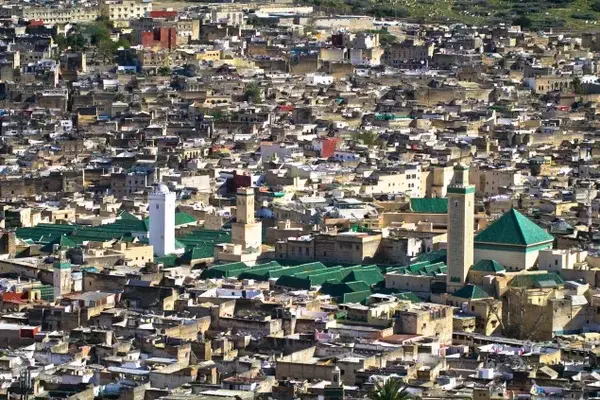
1. Fes el-Bali in Fez, Morocco

Step through the Blue Gate into the world’s largest car-free medieval city—9,400 winding alleyways where 150,000 people live as their ancestors did. Getting lost among leather tanneries and spice souks forces you to surrender control and trust strangers, a reminder that not everything worth finding can be Googled.
Best time to visit: March-May or September-November for mild temperatures
2. Glowworm Caves in Waitomo, New Zealand

Float silently through pitch-black caves beneath thousands of bioluminescent larvae creating nature’s own planetarium. The boat journey requires complete silence—no talking, no cameras. In our age of constant documentation, experiencing something you can’t immediately share teaches you that some moments are meant to be felt, not captured.
Best time to visit: December-March (summer) for warmer weather above ground.
3. Kallur Lighthouse in Kalsoy, Faroe Islands, Kingdom of Denmark

Eighteen volcanic islands with dramatic cliffs, grass-roofed villages, and more sheep than people. Hike to Kallur Lighthouse or photograph Múlafossur waterfall cascading into the ocean. Weather changes every hour—all four seasons in a single day.
Best time to visit: June-July for longest days and accessible trails.
4. Cappadocia in Aksaray, Turkey

Volcanic eruptions created fairy chimneys, hidden cave churches with Byzantine frescoes, and underground cities. One such city was even discovered by a local resident during a home renovation project. Take a hot air balloon ride at sunrise, explore the underground cities carved eight levels deep, or stay in a cave hotel.
Best time to visit: April-May or September-October for ideal balloon weather.
5. Langjökull Glacier Ice Caves near Húsafell, Iceland

November through March, Iceland’s glaciers reveal crystalline caves in impossible shades of blue. Because ice constantly melts and refreezes, you never see the same cave twice—each visit is literally once-in-human-history.
Best time to visit: January-February for most dramatic ice formations.
6. Petra, Jordan

Walk through the narrow Siq canyon and emerge facing the Treasury—a 2,000-year-old facade carved into rose-red rock. This Nabataean city features hundreds of tombs and temples carved into sandstone. Climb to the Monastery or hike to Little Petra for solitude.
Best time to visit: March-May or September-November. Early morning light makes the sandstone glow.
7. Cerro Fitz Roy in El Chaltén, Argentina

The Patagonia logo mountain. This 3,405-meter granite spire offers saw-toothed peaks and glacial lakes in impossible turquoise. The trek to Laguna de Los Tres delivers sunrise views that turn granite into a golden shade of pink. If you want extra adventure and you have time to take your journey northward, start in El Chaltén and then journey to the small town of Bariloche, where Argentina’s own Loch Ness monster is rumored to live.
Best time to visit: December-February (summer) for most stable weather.
8. Bagan in Nyaung-U, Myanmar

Over 2,000 Buddhist temples and pagodas built between the 11th-13th centuries dot ancient plains. Rent an e-bike to explore, climb select temples for sunrise, or take a hot air balloon ride. Less crowded than Angkor Wat, equally impressive.
Best time to visit: November-February (cool, dry season) for comfortable exploration.
9. Uyuni Salt Flat in Daniel Campos, Bolivia

The world’s largest salt flat—4,000 square miles of blinding white hexagons. During rainy season, thin water transforms it into the world’s largest mirror, reflecting perfect sky. For more inspiration, check out these beautiful photos and satellite images. Standing on these salt flats, where ground becomes sky and distance becomes meaningless, you understand that Earth still breaks every assumption about what’s possible.
Best time to visit: December-April for mirror effect, May-October for hexagonal patterns.
10. Plitvice Lakes in Plitvička Jezera, Croatia

Sixteen terraced lakes connected by waterfalls cascade through forested canyons in shifting shades of azure, green, and blue. Wooden walkways let you walk directly over crystal-clear waters.
Best time to visit: May-June or September for lush greenery and fewer crowds.
11. Jigokudani Monkey Park in Yamanouchi, Japan

Wild Japanese macaques soak in natural hot springs with snow falling around them in “Hell’s Valley.” They look hilariously human—eyes closed in contentment, grooming each other. A hike through snowy forest leads to nature’s most charming spa.
Best time to visit: December-March when snow creates dramatic contrast.
12. Route 66, USA

In 2026, the Mother Road celebrates its 100th birthday. The 2,400-mile stretch from Chicago to Santa Monica retains vintage motels, neon signs, diners, and quirky attractions—pure Americana.
Best time to visit: April-May or September-October for mild weather across climate zones.
13. Root Bridges in Cherrapunji, India

In one of Earth’s wettest places, the Khasi people – truly artisans – grow bridges from rubber tree roots over 10-15 years. Some are 500+ years old and still strengthening. The double-decker bridge requires 3,000 steps but teaches that patience beats speed, that working with nature trumps dominating it, and the best solutions might take longer than a single lifetime.
Best time to visit: November-February (dry season) for safer paths.
14. Havasupai Falls in Supai, Arizona, USA

Hidden in the Grand Canyon, waterfalls pour into pools so turquoise they don’t look real. Calcium carbonate creates desert-meets-Caribbean waters. Requires 10-mile hike and advance permits from the Havasupai Tribe.
Best time to visit: March-May or September-October for mild temperatures.
15. Socotra Island, Yemen

Split from Africa millions of years ago, over a third of the plant species here exist nowhere else. Dragon’s blood trees look like Dr. Seuss illustrations alongside desert roses and pink dunes. Standing among these otherworldly trees reminds you that isolation creates irreplaceable uniqueness worth protecting.
Best time to visit: November-March for comfortable temperatures.
16. Hallstatt, Austria

An Alpine village so picturesque that a Chinese mining company built a replica to bring some Europe into Asia. The original Hallstatt – in Austria – is well-worth a visit. It features ancient salt mines and the Charnel House with painted skulls. And… maybe you’ll get to the Chinese one next.
Best time to visit: May-June or September for smaller crowds.
17. Ta Prohm near Siem Reap, Cambodia

This hidden temple near Angkor Wat is being slowly consumed by jungle. At Ta Prohm, massive tree roots cascade over 12th-century stone and curious carvings stir controversy. Nature’s patient reclamation—neither destroying nor preserving, but transforming—teaches that endings and beginnings are often the same thing. What could be viewed as overgrown has become beauty.
Best time to visit: November-February (dry, cool season).
18. Marble Caves in Puerto Río Tranquilo, Chile

Six thousand years of water carved swirling marble caverns reflecting Lake General Carrera’s turquoise water in otherworldly blue. Best explored by kayak.
Best time to visit: December-February when glacial melt intensifies the blue.
19. Eduard Bohlen Shipwreck in Skeleton Coast, Namibia

Where the Namib Desert meets the Atlantic, rusted shipwrecks dot beaches alongside seal colonies and desert-adapted lions. This coastline—where sailors once perished and wildlife now thrives—proves that what looks like desolation to some is home to others.
Best time to visit: May-October for wildlife viewing and cooler temperatures. And for adventure, you can even stay in a “shipwreck.”
20. Zhangye National Geopark in Zhangye Shi, China

Rainbow mountains striped in red, yellow, orange, green, and blue—millions of years of mineral deposits creating nature’s abstract painting. Best after it rains, when colors intensify.
Best time to visit: June-September for vibrant colors after summer rains.
Each of these destinations offer more than photo opportunities—they’re invitations to see where humans and nature have collided and created extraordinary things. They’re invitations to pause and reflect. They’re invitations to change and grow.
The world welcomes you for a transformative 2026. Let’s Go.

Related Posts