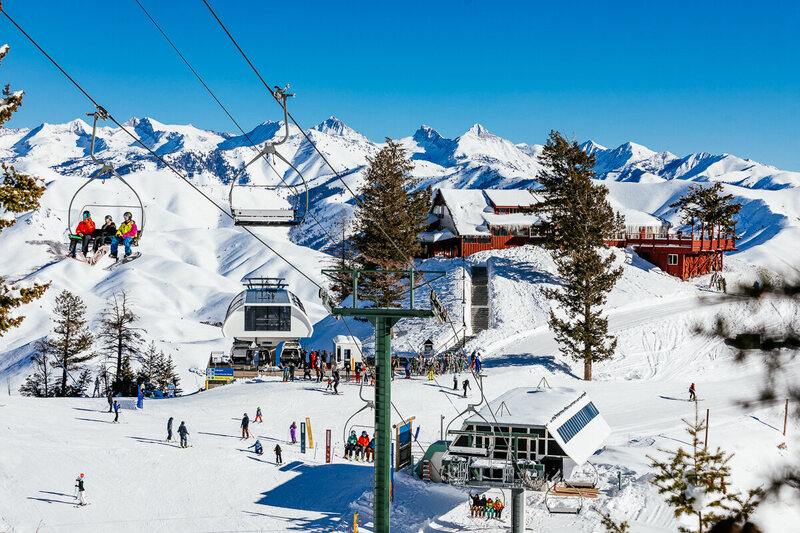
From top to bottom, Sun Valley is full of surprises. Only in this fascinating pocket of central Idaho can you experience an annual heritage festival that parades thousands of sheep from the mountains to Main Street by day, then discover some of the darkest night skies in the world for mind-blowing star gazing.
In between, you’ll relax in a botanical garden’s meditative nook, and visit the gravesite of one of the world’s most notable writers and explore a moon-like national park full of caves and lava flows. Enjoy this guide to 10 wonderful ways to start your Sun Valley adventure.
The Roundhouse

The Roundhouse, a staple of Sun Valley Resort since 1939, elevates any dining experience—literally. Located 7,700 feet above sea level on Bald Mountain, the restaurant has been a featured fine dining spot since 1939, and is open seasonally, December through March. The octagonal restaurant, featuring 46 windows, is only accessible only by gondola, and the sweeping views of the entire valley make the views as impressive as the menu. Inside oozes with a ski chalet-style, cozy ambiance, especially the four-sided fireplace. A popular starter, the Fondue For Two, comes with artisan bread, Granny Smith apples, grapes, and gherkins. You can also add specialty meats and vegetables for an extra charge. A Wagyu burger, lobster rolls, scallops, and elk Swedish meatballs all make the menu here.
Central Idaho Dark Sky Reserve

Grab your tent and experience the awe-inspiring wonder of Central Idaho’s starry, night sky in the Central Idaho Dark Sky Reserve. One of the last remaining areas of this level of nighttime natural darkness in the world, the reserve encompasses just under 1,500 miles of public lands inside the Sawtooth National Forest. Certified by the International Dark Sky Association in 2017, and given its highest “gold tier” status, the reserve features an ultra-dark core, plus dark periphery that helps protect the central dark area. Meteor showers, lunar eclipses, spring equinox and the summer solstice are just a few of the many public viewing events held at the reserve annually. The protected wilderness areas under these dark skies are also home to a stunning array of wildlife, including bears, wolverines, elk, wolves, and sandhill cranes.
Trailing of the Sheep Festival

Each fall, a woolly throng of sheep, roughly 1,200 in all, parade down the main street of Ketchum, Idaho, for the Trailing of the Sheep Festival. The treasured annual event commemorates the time-honored migration of sheep from Idaho’s high mountain summer pastures to the warmer, grazing and lambing grounds found farther south. For five days, the community celebrates the history, culture, and traditions of the region’s longstanding sheep ranchers, which include Basques, Peruvians, and Scots. Signature events include lamb-centered culinary classes, woolmaking workshops, a heritage fair, and national sheepdog trials. The 2026 festival is October 7-11.
Craters of the Moon National Monument and Preserve

A trip to Central Idaho’s Snake River Plain is just about as close to the moon as most of us will ever get. Aptly described as “a weird and scenic landscape” by President Calvin Coolidge when he established the 750,000-acre federally protected site in 1924, the Craters of the Moon National Monument and Preserve features a vast, lunar-like landscape of lava flows, cinder cones, and sagebrush. The unique environment was created thousands of years ago by a series of major eruptions along the 52-mile stretch of deep cracks in the Earth’s crust called the Great Rift. For generations, the park has garnered attention and profound fascination, and the wild terrain even served as a training ground for Apollo astronauts in the 1960s. Today, explorers enjoy discovering the park’s many lava tube caves and trails, and viewing the impressive overlooks while driving along the 7-mile Loop Road. Nature lovers and photographers also flock to the park for its surprising diversity of birds and other wildlife, plus it’s a designated dark sky park.
Sun Valley Museum of Art

In downtown Ketchum, the Sun Valley Museum of Art is just one of the many ways to explore the rich culture of the region—off the slopes. Now an integral part of Sun Valley’s arts and culture community, this free museum opened in 1971 and has grown to feature works from greats like Andy Warhol to important pieces from local and regional artists. Equal parts museum and educational hub, the center also features interesting lecture series, live music, films, and hands-on art classes and workshops throughout the year. The exhibit, “Hidden Gems: Idaho Collects,” brings art held in private collections in the region into public view through February 28, 2026. The exhibit aims to illuminate the region’s community through the art they make and collect
Pioneer Saloon

One part time capsule, one part fine dining, the Pioneer Saloon is a beloved go-to for Ketchum locals and visitors alike. Located on Main Street, and affectionately called “the Pio,” the Pioneer Saloon opened in the 1940s as a casino, despite gambling being outlawed in Idaho. Originally called the Commercial Club, the gambling hub closed its doors after just a few years, and the American Legion turned it into a meeting hall. For a short time, the facility also served as a dry goods store until, in 1950, a man named Whitey Hirschman, turned it back into a casino. Containing decades of local lore and history, the saloon won a 2025 James Beard America’s Classics Award. Today, the menu consists of hearty steaks, prime rib, ribs, and seafood, including Idaho trout. Order the signature “Jim Spud,” and you’ll get a hot baked potato with teriyaki beef, cheese, and other toppings. There’s even a “Hemingway Margarita” that pays homage to the famed author whose final resting place is in Sun Valley. Amid the rustic décor inside, you’ll find antiques and artifacts, including Hemingway’s hunting rifle, Western posters and artwork, a Native American canoe and arrowheads, and more.
Ernest Hemingway’s Grave

Despite Ernest Hemingway’s flamboyant, hard-living nature, the famed writer’s final resting place is a simple slab in a Sun Valley cemetery. Known for his heavy drinking, hunting, and womanizing lifestyle, Hemingway lived all over, from Spain and Cuba to Florida, penning works like, “The Sun Also Rises,” “For Whom the Bell Tolls,” and the Pulitzer Prize-awarded “The Old Man and the Sea.” He visited central Idaho many times before moving to the area prior to his death in 1961. Placed alongside his wife, Mary, under two towering spruce trees, the grave is a modest rectangular marker including just the writer’s name and dates of birth and death. In addition to the expected flowers, fans also pay respects by leaving behind booze bottles, coins, matches, and pens.
Sawtooth Botanical Garden

For a serene escape, head to the Sawtooth Botanical Garden in Ketchum. Located on five acres, the garden, which is also an educational non profit, centers on five major display gardens that represent the varied biomes in central Idaho. One must-see feature is the colorful Tibetan prayer wheel in the Garden of Infinite Compassion. It’s the only such wheel commissioned and blessed by the Dalai Lama in North America and the only one powered by flowing water. The 1,100-pound wheel is said to symbolize peace, healing and the dissemination prayers when turned.
Wood River Museum of History & Culture

This free cultural museum in downtown Ketchum celebrates the rich and varied history of central Idaho, from its native people and immigrants to the iconic Bald Mountain and its effect on the local landscape. One exhibit at the Wood River Museum, “A Writer in the New Country: Hemingway in 1939,” highlights Ernest Hemingway’s first trip to Sun Valley, a place that was dear to the writer up until his death in 1961. Sheep shears, a telegraph key, and vintage skis are all part of the interactive Cabinet of Wonders, which houses important regional artifacts. At the museum’s entrance, another exhibit honors the Shoshone-Bannock native peoples, who first inhabited central Idaho.
Ore Wagon Museum

This history museum in Ketchum highlights the importance of ore wagons during the region’s rich mining boom of the 1880s. These sturdy wagons, donated to the museum by the Lewis family, whose Fast Freight Line was integral in transporting silver ore from remote mines to in-town railheads, are reportedly the only of their kind in existence. In honor of its mining roots, the city hosts a heritage festival, Wagon Days, every Labor Day weekend. The beloved event features live music, food vendors, cultural presentations, and culminates with the Big Hitch, a parade of these historic, non-motorized vehicles that served as the backbone of the region’s economy before the development of the railroads.

Related Posts