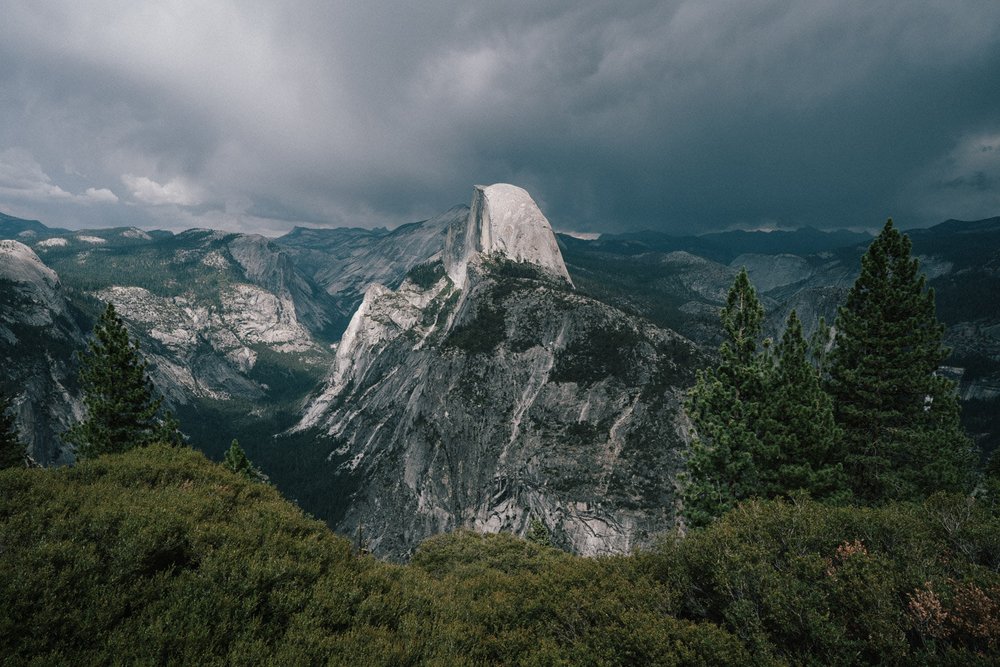
Arizona is wild in its environmental diversity, boasting five of the six distinct types of ecological biomes. Tundra, forest, woodland, scrub, grassland, and desert biomes are spread across the state, with four deserts, over 210 named mountain ranges, a biblical-scale monsoon season—and, of course, the Grand Canyon. The Sonoran Desert, which stretches across much of the state’s southern half, is a “lush desert,” meaning that it receives rain twice a year, and thus features a visually stunning blend of sepia tones and deep green vegetation.
The state’s rich culture reflects the diversity of its Native populations and the many who have migrated to the area, along with a strong connection to Mexican cultural heritage. The region is the ancestral and current home to twenty-two federally recognized Native American tribes, including Diné (Navajo Nation) and the Tohono O’odham Nation.
Northern Region: Flagstaff and Holbrook
Behold Arizona’s Sublime Beauty
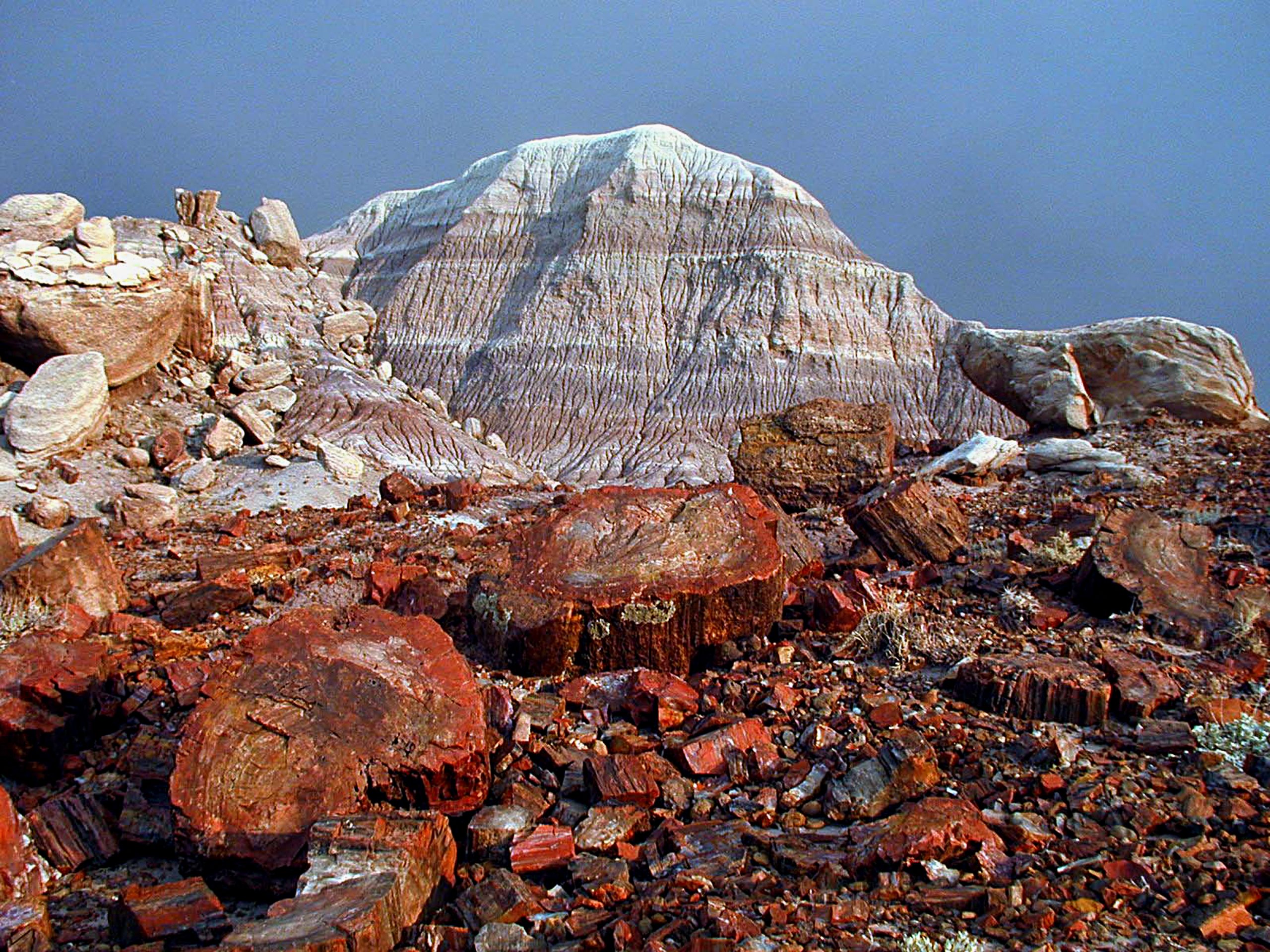
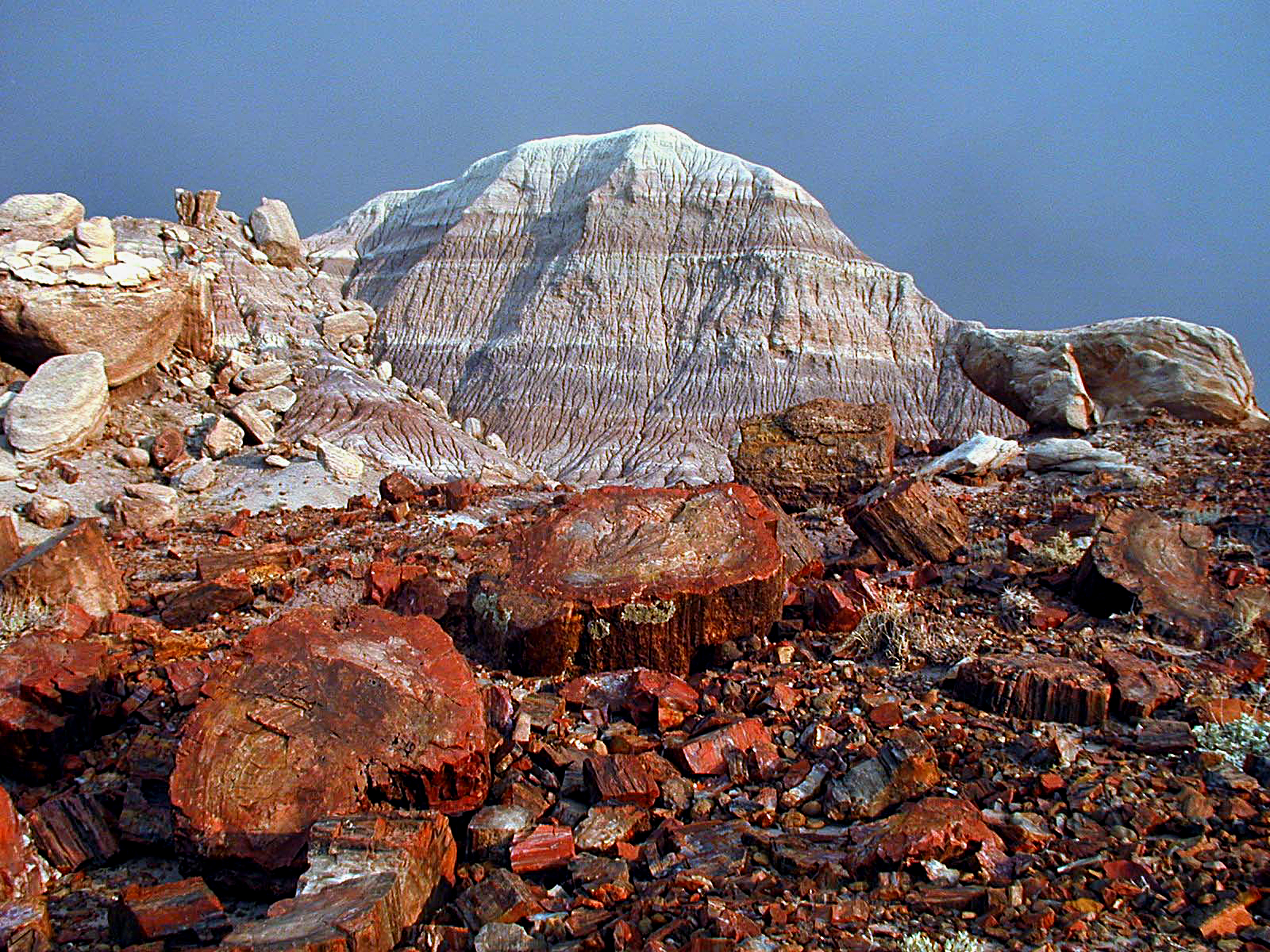
The Rainbow Forest includes the largest and most colorful displays of petrified wood in Petrified Forest National Park.
Tap/hover to learn more!
Ancient geology and celestial discovery converge in Northern Arizona, inviting travelers to reflect on humanity’s place between the stars above and the eons below. Many visitors come for the Grand Canyon, but Northern Arizona contains multitudes. The high-elevation region features rugged mountain ranges, the state’s highest peak, and four distinct seasons, making it a destination for winter sports, mountaineering, and astronomy. The charming city of Flagstaff serves as home base to Northern Arizona University, the regional destination ski resort Snowbowl, and the Flagstaff Mountain Film Festival.

Lowell Observatory
Stargazers flock to Lowell Observatory, a world-class astronomy destination on the edge of Flagstaff. The site has been in continuous operation since the late 1800s, when it was established by Percival Lowell, a financier and astronomer who became obsessed with the possibility of life on Mars. Lowell had the means to fund his fascinations, and thus Lowell Observatory was built, with Northern Arizona selected as its site for its high elevation and dark skies. Pluto was discovered here, and the city’s commitment was recognized in 2001, when Flagstaff became the first International Dark Sky City.

Mars Hill and Anderson Mesa
Just west of Flagstaff proper sits Mars Hill, part of Lowell Observatory’s campus and the site of the apocryphal origin story of the theory of dark matter. As you drive up the hill, spot the iconic dome of the Clark Refractor, a telescope dating back to the 1800s. Continue your astronomy tour by heading southeast to spot Anderson Mesa, a flattop plateau in Coconino County that hosts Anderson Mesa Station, a dark-sky astronomical observatory.

Petrified Forest National Park
Is it rock? Is it wood? The answer is yes at Petrified Forest National Park, where hundreds of millions of years of the organic process of permineralization have turned what was once a forest of trees into a wavy psychedelic desert landscape laden with fossils. These artifacts of the Triassic period (the era when dinosaurs are thought to have first appeared) include compression fossils of leaves, seeds, insects, and fish as well as scattered petrified logs.

Rainbow Forest
Nestled within Petrified Forest National Park, the Rainbow Forest features huge, vibrant rocks in deep reds, yellows, blues, and purples. The rocks began life as trees, petrified over hundreds of millions of years, and draw their vivid hues from minerals like manganese, iron oxide, quartz, and hematite. Pop into the Rainbow Forest Museum to learn about the geological and cultural history of the land, which is the historic home of the Ancestral Puebloan people.

Painted Desert
Before you leave Petrified Forest National Park, head to the park’s north side to visit the Painted Desert, another region of the park with unique geological characteristics. Here, find badlands with distinctly visible layers—looking like they were painted with a steady hand. These layers are the result of stratification of shale, mudstone, and siltstone, each of which carry a distinctive pigment.
Central Region: Clarkdale, Camp Verde, and Jerome
Explore Vibrant Arts, Culture, and Experiences
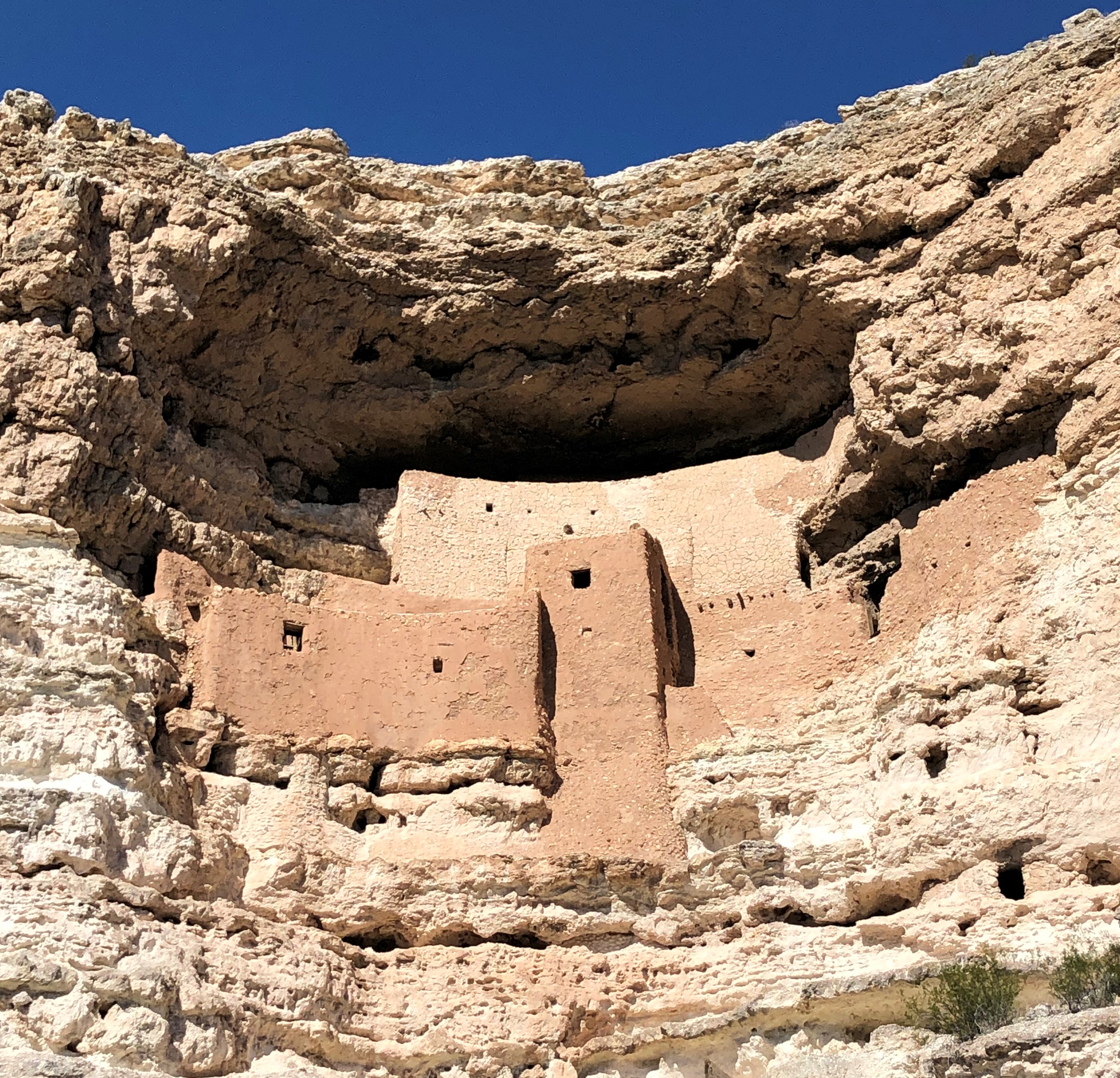
Evidence suggests the construction at Montezuma Castle National Monument began in the 1100s. It was occupied until as late as 1395.
Tap/hover to learn more!
In Central Arizona, Saguaros stand watch over canyons and copper towns, linking ancient ingenuity, industrial ambition, and enduring cultural roots. The region features the sprawling state capital city of Phoenix, but the whole area is rich with Indigenous culture as well as niche historic sites dedicated to preserving the stories of the Wild West. Copper mining was and is a significant industry in the region, and the remnants of the extraction business are conserved in installations like the town of Jerome’s Mine Museum.

Verde Canyon Railroad
The Verde Canyon Railroad, a quirky heritage railroad that runs 20 miles from Clarkdale to Perkinsville, features a vintage diesel locomotive powers that this sightseeing excursion, bringing riders through the vibrant wilderness landscape. In the canyon, keep your eyes peeled for the bald eagles who frequent the area.

Perkinsville Trestle
As you ride the Verde Canyon Railroad, you’ll pass over a series of gorges formed by the Verde River. These steep valleys are spanned by metal trestles—making for extraordinary vistas from the open-air viewing cars. When your rail car traverses the Perkinsville Trestle, the tracks, directly underneath the car, are obscured to riders, creating the feeling that the railroad has taken flight.

Arizona Copper Art Museum
The deposits of copper embedded in Arizona’s earth have enticed miners since Native people harvested ore to make tools and jewelry. Since the early 1900s, industrial mining has pulled copper from the land. The former mining town Clarkdale is home to the Arizona Copper Art Museum, which stands as a testament to the creative uses of the mineral. On a visit, check out the distillery room, where you’ll find elaborate copper vessel systems for winemaking.

Montezuma Castle National Monument
Pull off the highway in Camp Verde to stop by Montezuma Castle National Monument, a historic site that honors and preserves the prehistoric cliff dwelling architecture of the Indigenous Sinagua people. Built into a limestone cliff is a multi-level 20-room dwelling that is noted as one of the best-preserved examples of pre-contact architecture.
Montezuma Well
Within Montezuma Castle National Monument lies a giant hole: Montezuma Well. Nearly 400 feet from shore to shore, the “well” is in fact a huge, naturally occurring spring-fed limestone sinkhole full of carbonated, arsenic-laden water. The well serves as home to five species of fauna that exist nowhere else in the world, including the water scorpion.

Jerome’s Sliding Jail
In Jerome (population 464), the main attraction is a small jail structure that was erected in the early 1900s on the slope of a mountain. Dynamite from nearby mines caused the jail to literally slide down the hill until finding stasis on the main thoroughfare. Now a visitor’s attraction, the jail harks back to the days of the Wild West, when hard-drinking rabble-rousers would sleep it off within the cell’s walls.
Southern Region: Bisbee, Tubac, and Patagonia
Experience Arizona’s Welcoming Warmth and Ties to Nature
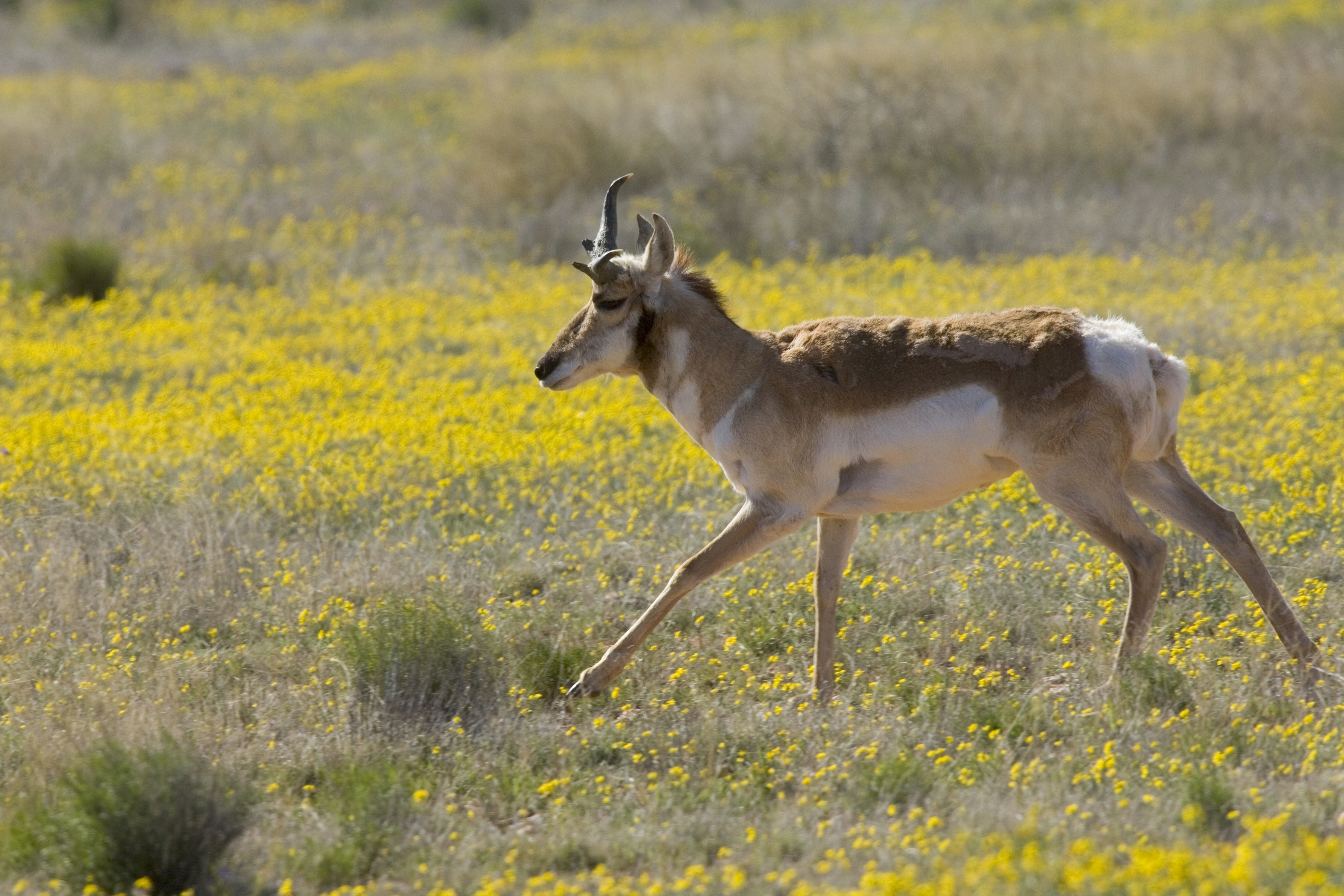
The Buenos Aires National Wildlife Refuge is home to hundreds of species, including the pronghorn antelope, mule deer, and puma.
Tap/hover to learn more!
Where wild canyons bloom and hummingbirds hover, artists, dreamers, and makers create in harmony with the desert’s vivid, living canvas. Known for its miles of Saguaro cacti, Southern Arizona is home to a large swath of the Sonoran Desert, about 370 miles of the U.S.-Mexico border, and the city of Tucson.
The Sonoran Desert is home to a diversity of flora and fauna, including prickly pear, Gila monsters, roadrunners, and the western diamondback rattlesnake. For more sedate engagements with local culture, Tucson is a dining hotspot: a UNESCO City of Gastronomy, a designation awarded to sites of global culinary significance.

Bisbee Breakfast Club
Bisbee Breakfast Club locations can be spotted across Southern Arizona, but Bisbee is the home of the original. Within the nondescript beige building, the charmingly weathered interior is classic American diner with a Southwestern twist. Nosh on regional Mexican favorites like huevos rancheros and fan-fave house specialties like the Copper Queen Skillet, a mashup of eggs, potatoes, and seemingly every kind of breakfast meat: bacon, ham, sausage, and spicy sausage gravy.
Old Bisbee Brewing Co.
For a bite and a brew in the kitschy town, the Old Bisbee Brewing Co. offers an eclectic and sophisticated menu of draft beers, brewed on-site. Strict IPA buffs will appreciate the heady Double Hopped IPA, while those with more experimental tastes may delight in the Mayan Stout, brewed using a heritage Mesoamerican bean.

Tubac Center for the Arts
Luxe meets rustic at Tubac, an arts and leisure complex tucked between the Tumacácori and Santa Rita mountains. Find the ritzy side at Tubac Golf Resort & Spa, where golfers flock to the 27-hole course and spa-goers indulge, but the arts and the grounds are the real draw. Explore Tubac to find four galleries, a performance space, and arts library, plus a trail system that connects with the Juan Bautista de Anza National Historic Trail.

Buenos Aires National Wildlife Refuge
Near the border town of Sasabe, 117,000 acres of public grassland desert serves as an ecological reserve. Habitat restoration makes the refuge a safe haven for 50+ mammal species, with the land sheltering endangered species including the masked bobwhite quail. Find an open-access trail system as well as guided hikes, and complimentary public-access campsites. Keep your eyes peeled for deer, javelina, coyotes, skunks, rabbits—even the occasional jaguar.

Paton Center for Hummingbirds
Patagonia’s Paton Center for Hummingbirds is a conservation space for more than 250 bird species, including the rare violet-crowned hummingbird. The 1.4-acre woodland site began its life as the yard of a pair of local birdwatchers, who in the 1970s began inviting others to join them in marveling at the tiny avian pollinators. From there, the local Audubon Society acquired the property, which is lovingly managed as an oasis for birds and birders alike.

Chiricahua National Monument
Find rocks on rocks on rocks at Chiricahua National Monument, where physics-defying rock stacks give an otherworldly feel to the ecological environs. The result of a historical volcanic event, the area’s rock formations (officially known as hoodoos and rhyolite pinnacles) look like blocks stacked by the hands of giants. Travelers can take in their weird splendor from 17 miles of maintained trails and campground facilities.

Related Posts